
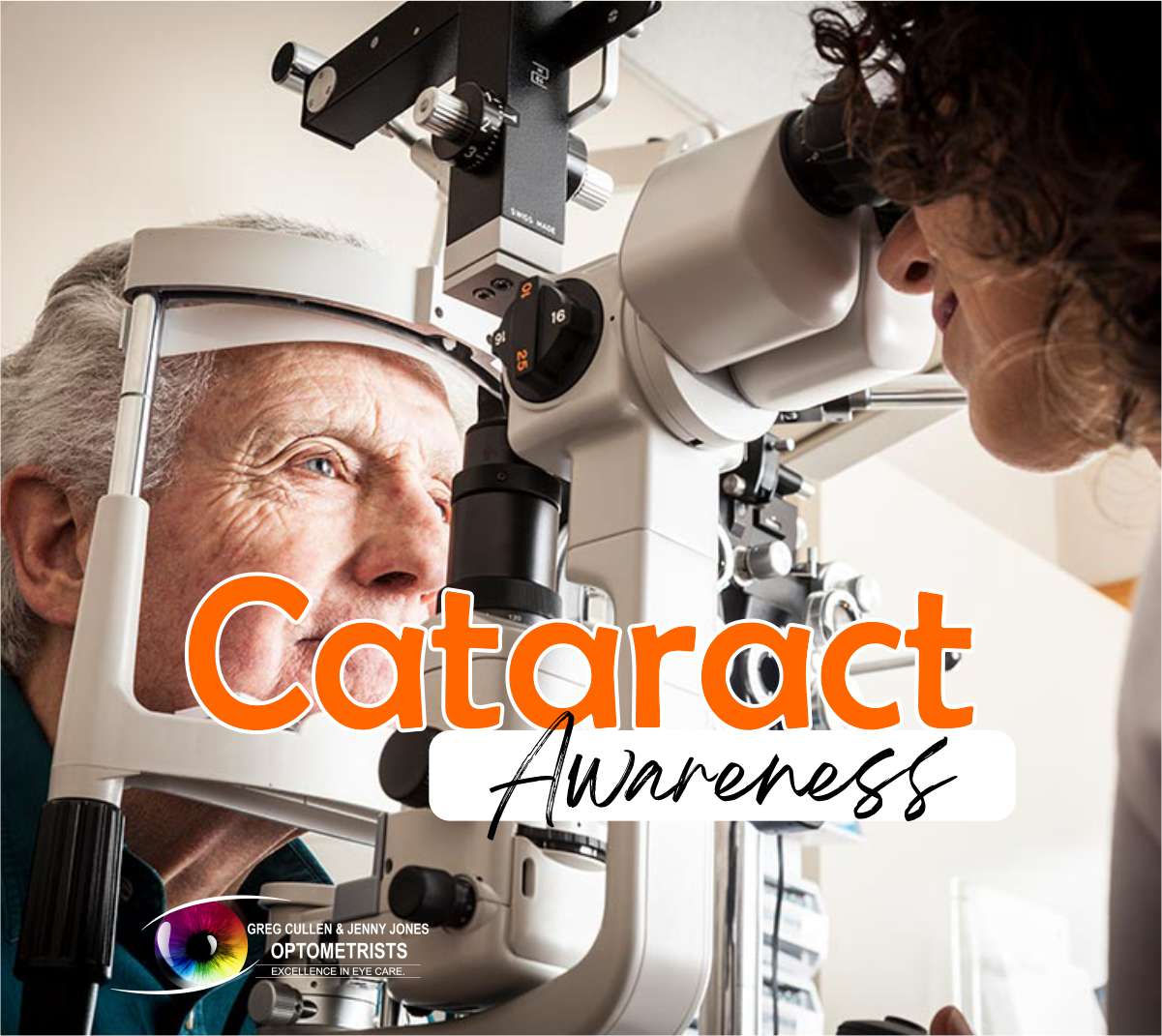
Cataract Awareness
A cataract is a clouding change in the clear natural lens that often occurs with aging. An eye surgeon removes the opaque lens and replaces it with a transparent artificial implant called an intraocular lens (IOL). According to the US patent.
Cataract surgery at the National Eye Institute is one of the safest, most common, and effective surgeries in the United States. In most cases, vision is drastically improved after surgery.
Cullen and Jones Optometrists are happy to be able to increase awareness of this particularly common eye illness and its treatment options as a pioneer in eye health.
We look forward to working with you and providing you with information and tools to help with cataract care.
Cataracts are a leading cause of blindness worldwide.
Cataracts, on the other hand, can be readily treated to avoid blindness if found early.
Despite this, there is still a lot of confusion and anxiety concerning cataract treatment and care alternatives.
Prevent Blindness and other like-minded organizations and NGOs work together every June to improve public perceptions about cataracts and assist individuals in need of treatment.
Myths & facts about cataract
MYTH: Cataracts only affect the elderly.
FACT: While cataract affects more than 24 million people over the age of 40, it may also affect young people or children.
Risk factors for developing cataracts at a younger age include:
• Eye infections
• Certain medications (for example, long-term steroid usage, cancer therapy)
• Eye injuries
• Exposure to extreme heat or radiation
Excessive exposure to non-visible sunlight (also known as UV or ultraviolet radiation)
• Diabetes, arthritis, and metabolic problems, to name a few.
• Smoking
• Cataract family history
• Nearsightedness (also known as myopia)
• Pregnancy infection or inflammation (such as measles or rubella)
MYTH: The optimal time to have cataract surgery is when the condition is first discovered.
FACT: Cataract removal is an elective operation, which means the patient chooses when to have it done.
Most individuals require cataract surgery when their eyesight is impaired enough to interfere with work, leisure, or other daily activities, such as driving.
Cataract surgery may also be performed if the cataract is interfering with the treatment of another eye illness.
You and your eye doctor should decide when and if surgery is necessary.
MYTH: Aspirin can help prevent cataracts.
FACT: There is insufficient data or facts to establish if aspirin prevents cataracts.
Large amounts of aspirin can be dangerous.
It’s advisable to avoid taking aspirin on a daily basis unless your doctor recommends it for a specific disease.
MYTH: Cataracts are removed with lasers.
FACT: During cataract surgery, a qualified surgeon removes the clouded lens and replaces it with an artificial lens implant.
Phacoemulsification (fei·kuh·uh·muh
l·suh·fuh·kei·shn) is the most frequent technique and needs a tiny incision in the cornea or, less usually, the sclera.
The surgeon breaks the lens into little pieces using sound waves (an ultrasonic equipment), then suctions the smaller bits out through the same incision.
Insert the lens into the capsular bag, which was its original place.
Cataract surgery is often performed on an outpatient basis.
The capsular bag that remains in your eye after the phacoemulsification treatment might become hazy at times.
This is known as post-cataract opacification or posterior capsular opacification.
If this occurs, your doctor may recommend laser surgery to create a tiny opening in the clouded capsule.
This hole will allow you to see properly once more.
MYTH: Cataracts are treatable with eye drops.
FACT: The only proven therapy for cataract is surgery.
Cataract cannot be cured with medication.
There is currently no FDA-approved treatment for cataracts, while this is an active field of study.
MYTH: Cataract surgery is risky.
FACT: Cataract surgery is a difficult procedure. Despite this, it is one of the safest surgeries carried out today.
Approximately 98 percent of procedures are successful. Complications such as inflammation, hemorrhage, infection, and retinal detachment occur in less than 2% of instances.
MYTH: Recovery from cataract surgery might take months.
FACT: In many circumstances, patients are able to resume regular activities within a few days following cataract surgery.
Your eyesight will improve more in the next weeks and months.
If you have other visual disorders, such as glaucoma, your recovery period may be longer.
MYTH: Taking Vitamin E or Vitamin C can prevent cataract
FACT: Some research centers are studying the link between these vitamins and cataract prevention. However, there has not been proven evidence for the link. It may be possible a diet high in fruit and vegetables containing Vitamin C, E, A and multivitamin-mineral supplements could be protective against cataract.
Contact us for more information about cataract screening